
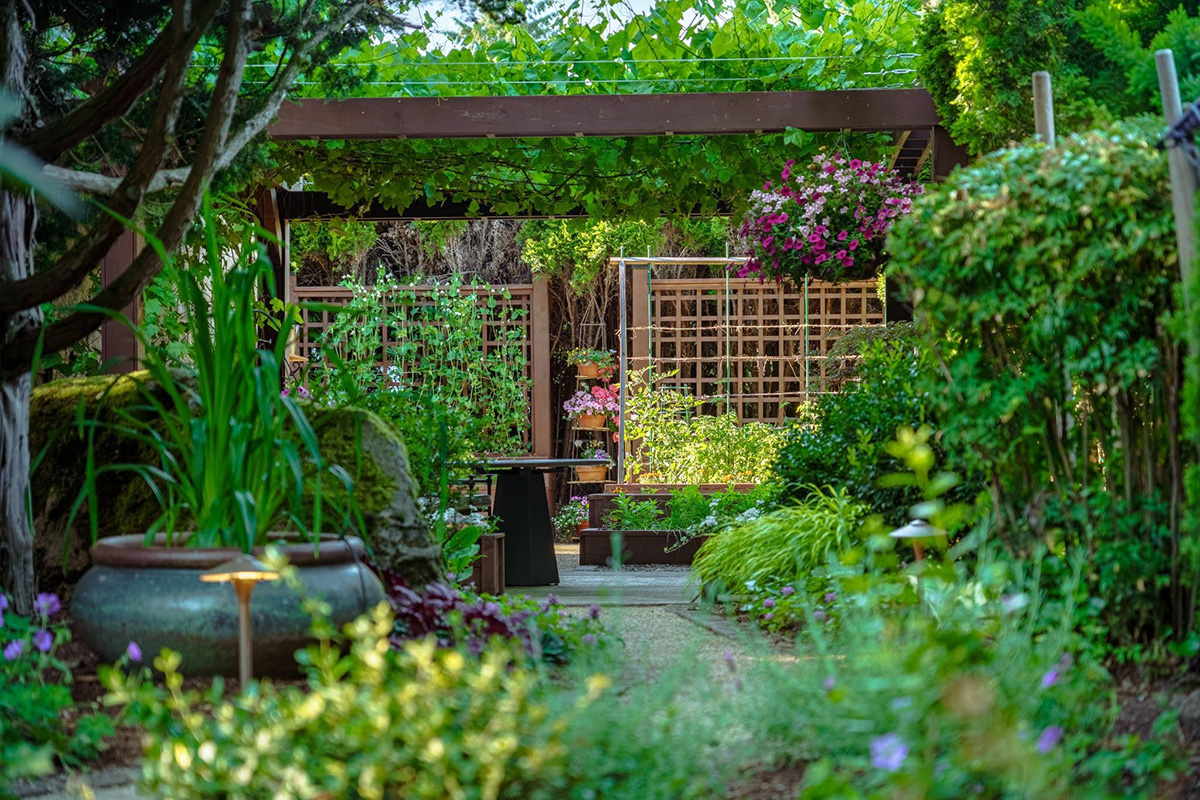
If you’ve lived in Southwest Washington or the greater Portland area for more than one winter, you already know: it’s not the cold that gets our yards, it’s the wet. Weeks of steady rain, the occasional windstorm, and soil that stays saturated for months can take a real toll on lawns, planting beds, patios, and anything else sitting outside your back door. The good news is that a little preparation in October and November goes a long way toward protecting your investment — and setting your yard up to bounce back beautifully come spring.
Whether you’re working with a brand-new landscape or one that’s been established for years, here’s what we recommend homeowners tackle before the rains really settle in.
Why Fall Prep Actually Matters Here
Our winters aren’t dramatic the way they are in colder climates, but they’re relentless. Saturated soil holds less oxygen, which stresses root systems. Standing water finds every low spot in a yard and exploits it. Freeze-thaw cycles, even mild ones, can crack unsealed hardscape and heave pavers that weren’t set on a proper base. None of this shows up overnight — it shows up in March, when you’re wondering why the lawn is patchy or why water is pooling against the foundation. Fall is when you get ahead of all of it.
Start With Cleanup and a Little Strategic Pruning
Clearing fallen leaves, spent annuals, and garden debris isn’t just about curb appeal. Wet leaf piles left on the lawn block light and trap moisture against the grass, which invites fungus and disease over the winter. A layer of leaves tucked under shrubs and in planting beds, on the other hand, is genuinely good for the soil and for overwintering pollinators — so there’s no need to bag every last leaf, just keep them off the turf.
Fall is also a reasonable time to remove dead or clearly damaged branches, especially anything long, thin, or hanging over a walkway, roofline, or fence. Heavy pruning is better saved for late winter, but taking down what’s obviously at risk of snapping in a windstorm is smart, cheap insurance.
Mulch: Cheap, Simple, and Genuinely Effective
If you only do one thing this fall, make it this. A 2 to 3 inch layer of organic mulch — bark, wood chips, or compost — insulates root systems against temperature swings, helps the soil hold moisture evenly, and slows erosion during heavy rain events. It also suppresses the winter weeds that would otherwise get a head start while you’re not looking. Keep mulch a few inches back from tree trunks and shrub stems so you’re not trapping moisture against the bark.
Give New and Tender Plantings Extra Attention
Fall is actually one of the best times to plant in our climate — the soil is still warm, rainfall does the watering for you, and roots get a head start before spring growth kicks in. If you’ve planted recently, or you’re adding PNW natives this season, a thick mulch layer and consistent moisture (yes, even in a rainy climate, newly planted roots can dry out between storms) will make the difference between a plant that sails through winter and one that struggles.
This is also a great time to lean into plants that are simply built for our climate. Vine Maple gives you structure and fall color without a fight. Red Twig Dogwood earns its keep in the dead of winter, when its bright red stems are often the only real color in the yard. Oregon Grape holds evergreen structure through the wet months and asks for almost nothing in return. Working PNW natives into a landscape isn’t just a sustainability talking point — it genuinely means less winter babysitting for you.
Check Your Drainage Before the Rain Finds the Problem for You
This is the step homeowners skip most often, and it’s usually the one that causes the most damage. Walk your yard during or right after a hard rain and watch where the water actually goes. Pooling near the foundation, water sheeting across a patio instead of running off, or a soggy low spot that never seems to dry out are all signs your yard’s grading or drainage isn’t doing its job.
Sometimes the fix is simple — clearing gutters and downspout extensions, or regrading a small area. Other times, standing water is a symptom of a bigger design issue: a patio without proper base and slope, a retaining wall without a drainage system behind it, or a low point in the yard that’s never had anywhere for water to go. Retaining walls we build use Allan Block and Versa-Lok systems specifically because their engineered drainage keeps water from building up behind the wall — which is what causes walls to bow, crack, or fail over time. If you’re noticing drainage issues every winter, that’s usually a sign it’s worth having someone look at the underlying design, not just the symptom.
It’s worth saying, too, that not every drainage problem is dramatic. Sometimes it’s just a section of lawn that stays spongy for weeks, or a side yard that never fully dries between storms. Those smaller issues are easy to live with for a season or two, but they tend to get worse, not better, especially as soil compacts over time. Catching them early, while they’re still an annoyance and not a hazard, is almost always the cheaper path.
Don’t Skip the Irrigation System
If your yard has an irrigation system, this is one of the easier fall tasks to forget — and one of the more expensive ones to ignore. Water left sitting in irrigation lines over a hard freeze can crack pipes, split fittings, and damage backflow devices, all of which turn into a spring repair bill instead of a five-minute fall task. Shutting off the water supply, draining or blowing out the lines, and insulating any exposed backflow preventer is standard practice for our climate. If you’re not sure whether your system needs a full blow-out or just a shutoff, it depends on how the system was installed — worth a quick check rather than a guess.
One Last Pass on the Lawn
Give your lawn its final mow of the season at a slightly shorter height than usual — long grass mats down under wet leaves and snow, which invites disease. Clear off leaves and debris so the grass can still get light and air. If you’ve been meaning to aerate or overseed thin patches, early fall is the window; once the soil cools and the rain really sets in, grass seed struggles to establish.
Protect Your Patios, Walkways, and Water Features
Hardscape holds up well in our climate when it was built correctly in the first place, but a few fall habits help it hold up even better. Sweep organic debris off pavers and stone regularly — wet leaves left in place can stain natural stone and create slick, slippery spots. If you have natural stone that isn’t sealed, fall is a good time to check whether it needs a fresh sealant application before the wet season sets in for good.
Water features need their own attention. Depending on the type, that might mean reducing pump run-time, adding a net to keep leaves out of the water, or fully winterizing the system if it’s not designed to run through hard freezes. If you’re not sure what your specific water feature needs heading into winter, our enhancements team can help — the wrong approach can damage pumps, liners, or plumbing that’s expensive to replace.
Outdoor furniture, cushions, and umbrellas deserve a similar pass. Anything fabric should be cleaned and stored dry rather than left to sit under a cover all winter, which traps moisture and invites mildew. Metal furniture that isn’t powder-coated can rust after months of exposure, so a dry, covered spot — a garage, shed, or even a tarped corner of the patio — goes a long way. It’s a small task that saves you from replacing furniture prematurely.
Fall Is Also Planning Season
Here’s the part that surprises people: late fall and winter, when the yard is quiet, is actually the ideal time to start planning next year’s outdoor living project. Design work, permitting, and material selection all happen well before ground ever breaks, so starting the conversation now means you’re not scrambling in April trying to get on a builder’s spring schedule. If part of what frustrates you about your yard every winter is the same drainage issue, the same soggy corner, or a patio that’s never quite worked the way you pictured it, that’s exactly the kind of thing a full design accounts for from the start — not something that gets patched around year after year.
Year Round Outdoor Living Design in Vancouver
If the same drainage problem, the same soggy patio, or the same high-maintenance corner of your yard shows up every winter, what would it look like to have it designed out for good instead of patched around? That’s the kind of thing we think through with every Greenhaven Outdoor Living design — not just how a space looks in July, but how it holds up in January.
If you’re starting to picture what next year’s project could look like, we’d love to talk it through with you.